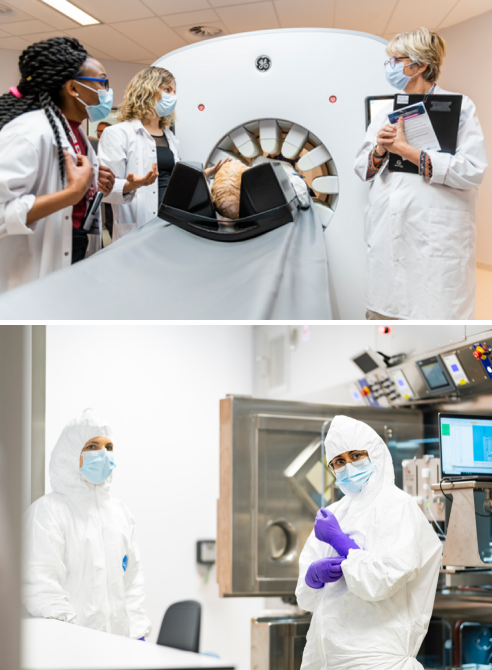
The Nuclear Medicine Department of the Brussels University Hospital (H.U.B.) was established in October 2022 following the merger of the nuclear medicine departments of the Institut Jules Bordet and Erasme Hospital. A unified leadership and centralized management structure were implemented, enabling full integration of the clinical expertise and resources of both sites, and positioning the H.U.B. Nuclear Medicine Department among the leading centers in Europe in terms of clinical activity as well as research and development potential.
In 2026, our department received the accreditation as a Theranostics Center of Excellence Level 2 (Advanced) from the European Association of Nuclear Medicine (EANM).
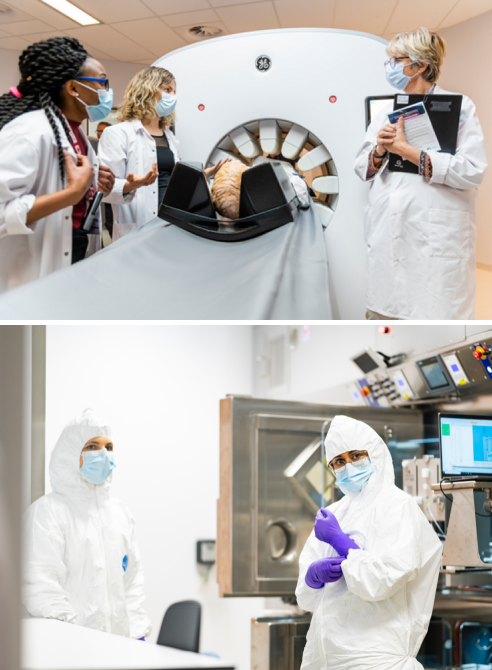
The nuclear medicine department of the Institut Jules Bordet offers patients diagnostic tests of the functional or molecular type, as well as treatments with targeted molecular radiotherapy.
The diagnostic tests differ from those carried out in the Radiology Department in that they involve the intravenous administration of substances labelled with radioactive isotopes, which specifically make it possible to identify the functionality or characteristic of an organ or of the cancer.
Therapeutic applications in nuclear medicine (often called “molecular radiotherapy”) use the same type of substance (tracer) specifically targeting the cancer tissue, but this substance is labelled with radioactive isotopes which emit therapeutic particles of the beta or alpha type enabling the destruction of the diseased cells.
The Department of Nuclear Medicine at the H.U.B brings together the nuclear medicine activities of Hôpital Erasme and the Institut Jules Bordet. It is organised into two clinics:
General Nuclear Medicine Clinic
This clinic manages a wide range of conditions through advanced imaging examinations (PET/CT and SPECT/CT). Its areas of expertise include:
- Cardiology: evaluation of coronary perfusion (ischaemia), detection of amyloidosis, assessment of cardiac viability
- Neurology: diagnosis of neurodegenerative diseases (dementia, Parkinson’s disease), epilepsy assessment
- Internal medicine: detection of infectious foci, rheumatologic and orthopaedic diseases, thyroid disorders
- Paediatrics
Oncological Nuclear Medicine Clinic
The Department of Nuclear Medicine at the H.U.B specialises in molecular imaging of cancer using PET/CT and SPECT/CT technologies. These examinations allow highly precise visualisation of the biological activity and molecular characteristics of tumours.
In addition to diagnostic imaging, the department also offers targeted radionuclide therapies. These treatments involve the injection of targeted radiopharmaceuticals that act directly on diseased cells while preserving healthy tissues. This innovative therapeutic approach is particularly effective for:
- Prostate cancer (with PSMA-targeting radioligands)
- Neuroendocrine tumours (with somatostatin receptor-targeting radioligands)
- Malignant paragangliomas and pheochromocytomas (MIBG therapy labelled with radioactive iodine)
- Thyroid cancer (radioactive iodine therapy)
- Primary or secondary liver tumours (radioembolisation treatment)
The Nuclear Medicine Department of the H.U.B. is equipped with a state-of-the-art technological platform designed to meet the most advanced requirements in diagnosis and treatment.
PET/CT (Positron Emission Tomography combined with Computed Tomography): this technique combines functional imaging (PET) with morphological/anatomical imaging (CT) to identify metabolic or molecular abnormalities associated with benign or malignant diseases.
SPECT/CT (Single Photon Emission Computed Tomography combined with Computed Tomography): it enables visualization of the distribution of gamma-emitting radiopharmaceuticals in the body and helps assess organ function. These hybrid cameras (combining nuclear detection with CT scanning) provide 3D visualization, precise lesion localization, and improved interpretation of results.
Cyclotron: the H.U.B., in partnership with other hospitals, operates a cyclotron, a circular particle accelerator. This high-tech equipment produces positron-emitting radioisotopes, which are essential for PET/CT examinations.
GMP-certified radiopharmacy: this unit complies with European Good Manufacturing Practice (GMP) standards, ensuring the sterility, traceability, and pharmaceutical quality of substances administered to patients.
Five specialized inpatient rooms: designed for the safe administration of radiopharmaceutical treatments, these rooms meet radiation protection standards and allow optimal patient monitoring.
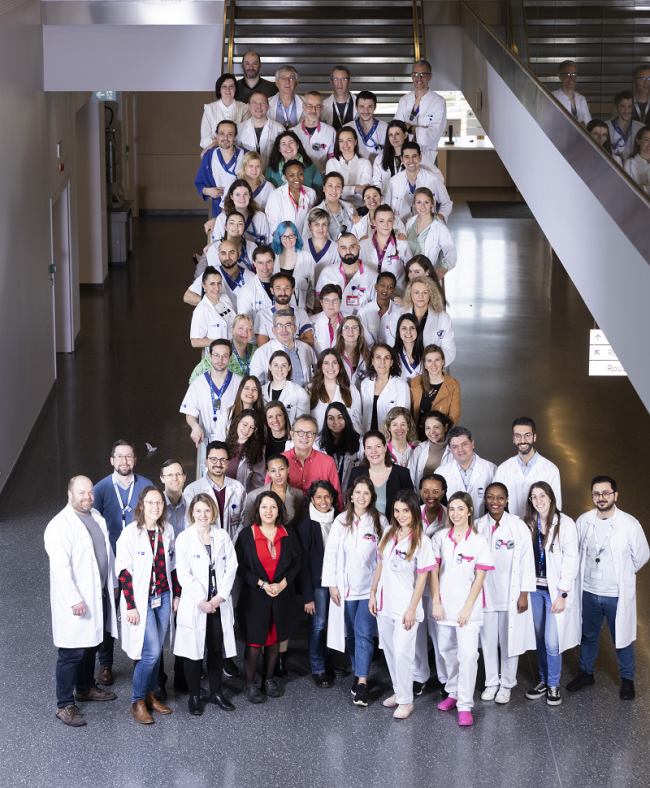
A multidisciplinary team at the service of patients. The quality of care is based on close collaboration between multiple professions, each bringing specific expertise at every stage of the patient journey.
- Nuclear medicine physicians specialized in molecular imaging diagnostics and targeted nuclear therapies
- Radiation safety officers ensuring staff protection
- Medical physicists ensuring the quality of equipment
- Pharmacists specialized in radiopharmacy
- Technologists and nurses trained in the specificities of nuclear medicine
Molecular Imaging in Oncology
These techniques make it possible to visualise and characterise abnormalities in various biological processes at the cellular and molecular level in a non-invasive way. They play a key role in oncology by contributing to personalised medicine: selecting the right treatment, at the right time, for the right patient.
Radiotracers available for PET/CT imaging in oncology include:
- F18-FDG (metabolic imaging)
- Ga68-PSMA (prostate cancer)
- F18-PSMA (prostate cancer)
- Ga68-DOTATATE (tumours expressing neuroendocrine receptors)
- Ga68-FAPI (peritoneal carcinomatosis; not reimbursed in Belgium)
- Zr89-trastuzumab (HER2 receptor expression; breast cancer; not reimbursed in Belgium)
Molecular Imaging in Neurology
Molecular imaging in neurology enables in-depth exploration of the brain by visualising abnormalities in brain activity at the molecular level, often long before clinical symptoms appear.
At the H.U.B, neurological molecular imaging using PET/CT or PET/MRI is integrated into a multidisciplinary approach combining clinical expertise, technological innovation, and personalised patient care. The metabolic and molecular brain imaging techniques available in clinical practice at the H.U.B include:
- FDG PET/CT (tracer: F18-fluorodeoxyglucose), which measures glucose metabolism in the brain. This technique is particularly useful for evaluating cognitive disorders and dementias. In Alzheimer’s disease, it can reveal characteristic hypometabolism in temporo-parietal regions, thereby contributing to a more accurate diagnosis.
- FDG PET/CT may also help localise the cerebral focus responsible for treatment-resistant epilepsy.
- Amyloid PET/CT (tracer: F18-flutemetamol), which detects amyloid protein deposits, early markers of Alzheimer’s disease, and helps differentiate neurodegenerative forms of dementia.
- FET PET/CT (tracer: F18-fluoroethyltyrosine), a molecular imaging technique mainly used for the evaluation of brain tumours, particularly gliomas. It distinguishes active tumour tissue from areas of necrosis or oedema, which is essential for treatment planning and monitoring therapeutic effectiveness. This non-invasive examination offers high diagnostic accuracy and plays a key role in therapeutic follow-up and treatment response assessment.
Radiotheranostics
Radiotheranostics combines molecular diagnosis and nuclear therapy in an integrated approach. It unifies the stages of molecular diagnosis (identifying patients whose tumour lesions express the molecular target) and nuclear therapy (selective irradiation of target cells regardless of their location in the body).
In practice, before therapeutic administration, the same molecule is injected after being labelled with a radioactive isotope for diagnostic purposes. This step makes it possible to reserve treatment for patients with high expression of the therapeutic target. The diagnostic isotope enables whole-body PET/CT imaging.
For therapeutic applications, Lutetium-177 is currently used. At the same time, developments are underway involving alpha particle-emitting isotopes (such as Actinium-223 and Astatine-211), which have demonstrated even greater anti-tumour efficacy.
The Institut Jules Bordet has always played a pioneering role in therapeutic applications of Nuclear Medicine. In recent years, several new treatments have been developed there, particularly for patients with neuroendocrine tumours (PRRT: peptide receptor radionuclide therapy) and metastatic prostate tumours (PRLT: PSMA-targeted radioligand therapy).
Targeted nuclear therapies available at the Jules Bordet Institute include:
- Lu177-DOTATATE (PRRT) for metastatic neuroendocrine tumours
- Lu177-PSMA (PRLT) for metastatic prostate tumours resistant to hormone therapy
- Radioembolisation of primary or metastatic liver tumours (SIRT) using Yttrium-90-loaded microspheres
- Radium-223 (Xofigo) for prostate cancer bone metastases
- Iodine-131 for thyroid cancer
- I131-MIBG for metastatic paragangliomas and neuroblastomas
ULB NET CENTER (ENETS Center of Excellence)
The ULB NET Center is the first bilingual Belgian centre to obtain certification as a Center of Excellence for Neuroendocrine Tumours, awarded by the European Neuroendocrine Tumor Society (ENETS).
This certification, obtained in March 2023 following a rigorous audit, confirms full compliance with particularly demanding quality criteria. These criteria assess the overall diagnostic and therapeutic management of patients with neuroendocrine tumours, a rare oncological disease entity.
It represents an objective recognition of the excellence of care provided, resulting from many years of commitment and sustained work by a multidisciplinary team specialised in neuroendocrine tumours.
This distinction reflects the implementation of ENETS recommendations, the team’s ongoing commitment to continuous training, and active participation in research projects and clinical studies at both national and international levels, with the constant objective of providing the highest quality healthcare.
The Nuclear Medicine Department of the H.U.B. participates in numerous fundamental, translational, and clinical research projects across various fields. Its primary mission is the development of new diagnostic and therapeutic techniques.
Clinical research is an integral component of the Nuclear Medicine Department, with multiple phase I–II–III clinical trials covering diverse areas such as oncology, cardiology, and neurology.
The department has its own research team—including physicians, physicists, research assistants, and fellows—and benefits from the H.U.B.’s Clinical Trials Support Unit (CTC) for project management.
Currently, the Nuclear Medicine Department participates in four European research programs (2024–2030):
- Accelerate: Innovative Health Initiative – Elevating the Future of Cancer Care with Alpha Theranostics (https://ihi-accelerate.eu/)
- Thera4Care: Innovative Health Initiative – Theranostics Ecosystem for Personalized Care (https://www.thera4care.eu/)
- Oasis: Horizon Europe Program (Grant no. 101156771) – Optimal methods to characterize ADC resistance in solid tumors and identify clinically useful biomarkers
- COMPASS: Horizon-JU-IHI 2025 – Cardio-Oncology Multidisciplinary Patient Assistance Solution
Preclinical and Translational Research in Nuclear Medicine
The Nuclear Medicine Department of the Institut Jules Bordet relies on two research laboratories: ATHENO (Advancing Theranostics in Nuclear Oncology) and nuMIx (Nuclear and X-ray Molecular Imaging Laboratory). Complementary in scope, they cover the entire spectrum of preclinical and translational nuclear medicine applications, addressing all needs in the development and evaluation of radiopharmaceuticals.
ATHENO
In 2024, the Nuclear Medicine Department established ATHENO, a preclinical and translational research laboratory located on the ULB medical campus, dedicated to the development of radiotheranostics in oncology.
ATHENO pursues two main objectives:
- Better understand the radiobiology of treatments using radiopharmaceuticals to propose strategies that optimize their effectiveness and use.
- Develop new radiopharmaceuticals targeting different cancer types, from design to preclinical evaluation, to expand the indications of radiotheranostics.
Activities at ATHENO include radiobiology studies, preclinical development of new radiopharmaceuticals—including toxicity studies—as well as translational studies. These research projects use clinically relevant models and also incorporate patient-derived samples. The team works closely with the clinical Nuclear Medicine Department to accelerate the translation of discoveries to patients.
ATHENO is equipped with dedicated preclinical nuclear medicine research tools, including a controlled animal facility, a microPET/CT, a micro-irradiator, and devices for blood analyses.
ATHENO is integrated within the BCRL (Bordet Cancer Research Labs) of the Institut Jules Bordet and actively collaborates with several academic and institutional partners in Belgium, including VUB, KUL, and SCK-CEN.
nuMIx
The nuMIx laboratory, located on the Gosselies campus and integrated into the CMMI (Center for Microscopy and Molecular Imaging), affiliated with ULB, specializes in generating, analyzing, and interpreting in vivo imaging in animal models. With over 15 years of experience, nuMIx covers diverse areas including oncology, metabolism, inflammation, neurology, microbiology, parasitology, cell therapy, and medical devices. Since joining the Institut Jules Bordet’s research activities, nuMIx has focused its efforts on radiotheranostics, in synergy with ATHENO.
Services offered include:
- µPET, µSPECT, autoradiography, and µCT imaging of small animals
- Management of animal models (implementation, monitoring, ethical protocol drafting)
- Design and supervision of customized experimental procedures in close collaboration with partners
nuMIx is equipped with state-of-the-art instruments, including:
- VECTor platform (MILabs/Rigaku), optimized for detecting low- and high-energy radioemitters
- Skyscan 1276 µCT (Bruker), offering resolution up to 10 µm
- nanoScan PET/CT (Mediso), providing comprehensive nuclear imaging coverage
The Department of Nuclear Medicine is a training unit recognised for the training of doctors specialising in nuclear medicine (complete training programme).
Each year, it welcomes 1 or 2 young doctors training in nuclear medicine, as well as students on a masters in medicine course (1 or 2 per month). It organises regular seminars recognised to be part of in-service training of specialist doctors.
The Department also welcomes trainees training to be medical technologists.
The Department of Nuclear Medicine of the Institut Jules Bordet is the only service of the ULB network which provides systemic radionuclide cancer treatments (thyroid and neuroendocrine cancers). It has therefore become a national and international reference centre for specific training in “theranostics” and molecular radiotherapy.
Our team
Head of Department
- Prof Patrick Flamen
Medical Team (H.U.B)
- Dr Géraldine Gebhart, Director of the nuclear medicine oncology clinic
- Dr Carlos Artigas, Director of the General Clinic in Nuclear Medicine
- Dr Gil Leurquin-Sterk, Hospital Professor
- Dr Erwin Woff, Hospital Professor
- Dr Nicolas Dumarey, PHU Senior
- Dr Ioannis Karfis, PHU Senior
- Dr Elçin Özalp, PHU Senior
- Dr Irina Vierasu, PHU Senior
- Dr Liliana Quintero-Caicedo, PHU Senior
- Dr Younes Abadi, Resident
- Dr Amélie Castiaux, Resident
- Dr Juanito Gebruers, Resident
- Dr Magdalena Mileva, Resident
Medical Physics associated with Nuclear Medicine (H.U.B)
- Rachele Danieli, Radiophysicist
- Clémentine Marin, Radiophysicist
- Bruno Vanderlinden, Chief Radiophysicist
- Benoît Collette, Engineer
- Nicola Trotta, Engineer
- Anthony Joly, Computer Technician
- Thomas Guiot, Chief engineer - ORILaB Manager
- Hugo Levillain, Medical physicist, Head of research
Internal physical control service (H.U.B)
- Marie Christiane Yimo-Wadje
- Théophile Tchakoua
- Gaëlle Tchapgwai Nougang
- Julien Lochet
- Johann Griselain
Radiopharmacy (H.U.B)
- Prof. Zéna Wimana, Director
- Julie Cousaert, QP
- William Auert, Radiopharmacist
- Sigrid Vercauteren, Radiopharmacist
- Simon Cerfontaine, Production Manager
- Khalid Milloudi, Manager QC
- John Van Naemen, Manager E&T
- Adriana De Matos, Deputy Operator Manager
- Mokhtar Akodad, Operator
- Bernard Hauquier, Operator
- Orian Lambin, Operator
- Etienne Luciani, Operator
- Eric Mulleneers, Operator
- Kadidja Ouldadda, Operator
- Sylviane Rottiers, Operator
- Martin Khalatyan, Opérator
- Nohaila Kanar, Opérator
Clinical Research Fellows
- Dr Anne-Leen Deleu
- Dr Mutaz Kassas
- Dr Ayça Arçay Öztürk
- Dr Raluca Poenaru
- Dr Thibault Vanbutsele
H.U.B. Preclinical Research Unit (ATHENO)
- Patrick Flamen, Academic leader
- Wendy Delbart, ATHENO Director
- Julie Delepine, Doctorant
- Eline Daems, Doctorant
- Charlotte Henrot, Doctorant
- Laurent Theunissen, Laboratory Technician
Numix Preclinical Research Unit – CMMI (ULB)
- Hugo Levillain, Academic leader
- Gilles Doumont, lab-manager
- Caroline de Maeseneire, Research logistics
- Nicolas Passon, Laboratory Technician
- Christophe Van Heymbeek, Laboratory Technician
Clinical Research Management and Coordination Unit - Nuclear Medicine
- Loubna Taraji , Head clinical research coordination
- Siham Bafdili
- Salma Nisar
- Maria Lourdes Vicente
- Ines Van Waasdijk
- Lisa Mialon
Treatment coordination + consultations H.U.B
- Marie-Noëlle Gheeraert
- Pauwel Thijs
Technologists, nurses, logistics assistants and nursing assistants (H.U.B)
- Sara Coelho Sousa, Head of Technologists
- Patricia Da Silva, Assistant Head
- Stéphane Coppens
- Simon De Bast
- Valérie De Clercq
- Marie-Flore Devos
- Sara Da Silva Araujo
- Biran Esat
- Christel Finet
- Nicole Gahunga
- Florine Gatez
- Beatriz Goncalves De Freitas
Executive/services Secretariat – Medical Secretariat (H.U.B)
- Evelyne Gossiaux
- Jessie Toussaint
Secretariat - Reception (H.U.B)
- Asma Elaisati, referent
- Yasmina Aliouat
- Nathalie Boets
- Naïma Chadya
- Sabine Feuillet
- Alyssa Hammouda
- Béatrice-Anandi Henriet
- Salwa Tinasti
- Véronique Vandermeeren
24/05/2026
Research projects
Projet 1
Tolerability and efficacy of 177Lu-DOTATATE in relapsing and refractory multiple myeloma patients expressing somatostatin receptors
- Project Leaders : Wendy Delbart, Ioannis Karfis, Erwin Woff, Patrick Flamen, Marie Vercruyssen (Hématologie), Nathalie Meuleman (Hématologie)
- Funding/Support : «Association Jules Bordet»
Projet 2
MOLECULAR BIOMARKERS IN METASTATIC CASTRATE RESISTANT PROSTATE CANCER: PSMA EXPRESSION, METABOLIC ACTIVITY, AND CIRCULATING CELL-FREE DNA
- Project Leaders : Carlos Artigas, Patrick Flamen
- Funding/Support : FCC (Fondation Contre le Cancer)
Projet 3
LUTETIUM-177 DOSIMETRY AS A PREDICTIVE BIOMARKER OF RESPONSE IN METASTATIC CASTRATE RESISTANT PROSTATE CANCER PATIENTS TREATED WITH PSMA RADIOLIGAND THERAPY. THE LUDOPATH TRIAL
- Project Leaders : Carlos Artigas, Patrick Flamen
- Funding/Support : «Association Jules Bordet»
Projet 4
USE OF ARTIFICIAL INTELLIGENCE IN NUCLEAR MEDECINE
- Project Leaders : Erwin Woff, Hugo Levillain
- Funding/Support : «Association Jules Bordet»
Projet 5
ETUDE PILOTE D’IMAGERIE PSMA-PET/CT EN VUE D’EXPLORER LA POSSIBILITÉ D’UNE THÉRAPIE BASÉE SUR LE PSMA COMME FUTURE OPTION THÉRAPEUTIQUE CHEZ LES PATIENTES ATTEINTES D’UN CANCER DU SEIN MÉTASTATIQUE TRIPLE NÉGATIF.
- Project Leaders : Géraldine Gebhart , Zena Wimana
- Funding/Support : «Association Jules Bordet»
Projet 7
IMAGERIE MOLECULAIRE DES FIBROBLASTES ASSOCI2S AU CANCER DANS LE GLIOBLASTOME : une étude FAPI PET/IRM. GlioFAPI
- Project Leaders : Gil Leurquin, Amélie Castiaux
- Funding/Support : «Association Jules Bordet»
Projet 8
IMAGERIE MOLECULAIRE DE HER2 PAR TEP-TDM AU 89Zr-TRASTUZUMAB COMME BIOMARQUEUR PREDICTIF POUR LE SEQUENCAGE DU CONJUGUE ANTICORPS-MEDICAMENT CHEZ DES PATIENT(E)S ATTEINT(E)S D’UN CANCER DU SEIN HER2-POSITIF AVANCE – ZEPHIR 2
- Project Leaders : Soraia Lobo Martin, Géraldine Gebhart
- Funding/Support : Roche
Projet 9
THERAPIE PAR RADIOLIGAND MARQUE AU LUTETIUM-177 ET CIBLANT LA PROTEINE FAP CHEZ LES PATIENTS ATTEINTS DE CANCER DES VOIES BILIAIRES ET OESOGASTRIQUE PROGRESSANT SOUS IMMUNOTHERAPIE
- Project Leaders : Ayça Arçay Ozturk, Patrick Flamen
- Funding/Support : Fondation contre le cancer